Frame-accurate timecode review that survives real edit rounds
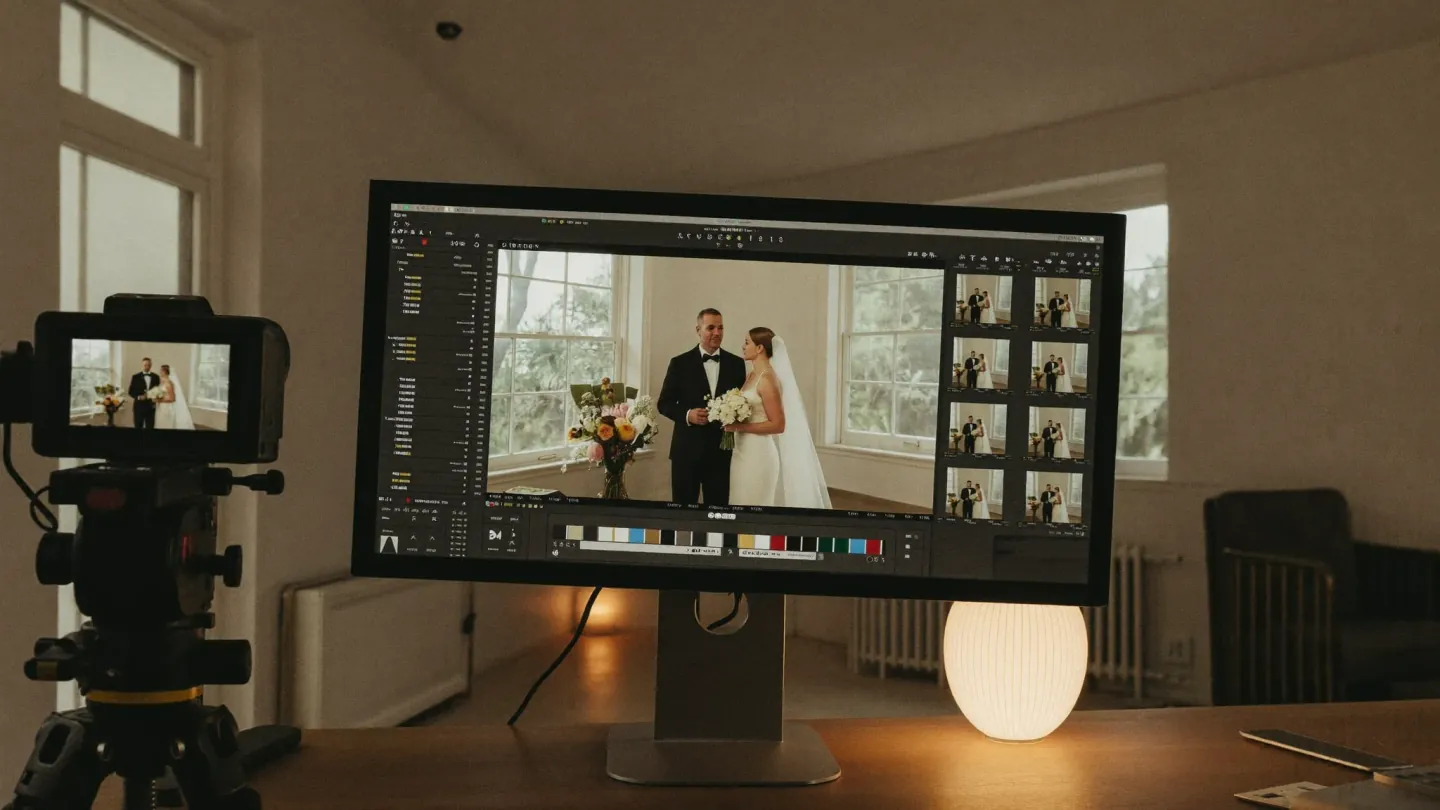
A note that says "fix the cut near the end" costs an editor twenty minutes. In Hitbook Video Studio every comment attaches to a precise timecode and frame, so the note reopens in the same place on the next version even if the sequence shifted by four seconds. Clients scrub, pause, and type without thinking about the technical layer, and the editor receives an ordered list instead of a voice message.
Commercial clients need more than comments. On-screen freehand drawing lets a brand manager circle a logo placement, sketch a crop, or mark a safe-zone violation directly on the frame. Drawings persist per version, so a pass from the agency, a pass from the couple, and a pass from your colorist stay separated instead of collapsing into one contradictory thread.
- Comments pinned to exact timecode and frame, never to a vague timestamp
- Freehand drawing on the frame for crop, logo, and safe-zone notes
- Separate review threads per stakeholder group and per version
- Resolved notes stay visible in history for the final delivery check
Three-way soundtrack approval: library, YouTube reference, custom upload
Music is the most common reason a final cut gets stuck in approval. Hitbook handles it three ways in the same review surface. First, licensed tracks from the Hitbook library can be swapped and approved in-session. Second, a YouTube reference link lets the couple or the brand say "this feeling" without licensing questions, and the team sources a cleared equivalent. Third, a custom track upload accepts the studio's own licensed file with a notes field for license terms.
Each option is versioned alongside the picture, so you always know which track was approved against which cut. If a client changes the song after picture lock, the approval record shows exactly which version needs re-review. That single link between audio and picture is what stops the loop of "approved the old one" arguments three weeks before the wedding.
Direct NLE marker export and version history
Review tools lose their value when someone has to retype notes into the timeline. Hitbook exports markers directly as FCPXML, which imports into Final Cut Pro, Premiere Pro and DaVinci Resolve with comments attached to the correct frames. Editors who plan in spreadsheets also get a CSV with timecode, comment text, author, and resolution status.
Version history keeps every upload traceable. Each version carries its own marker set, drawing layer, soundtrack selection, and approval state, so a rollback is a click rather than a rebuild. When a client asks in month six for the cut they liked, the version number and its approval record answer the question without a search through external drives.
- FCPXML marker export for Final Cut Pro, Premiere Pro and DaVinci Resolve
- CSV export with timecode, author, comment and status columns
- Version history with per-version markers, drawings and approvals
- One-click rollback to any approved version
Cloudflare R2 playback and selective Drive import compared with Frame.io, StudioBinder, Vimeo Review and raw Drive links
Playback quality decides whether a review call is productive. Hitbook streams from Cloudflare R2 with adaptive delivery, so a five-gigabyte master scrubs on hotel wifi without the buffering spiral of a raw Drive preview. Google Drive import is selective through the folder picker: you bring the exact camera folders for that project, not an entire production account, and the source structure stays intact for the archive.
The table below compares the pieces that decide a review stack: timecode accuracy, drawing, soundtrack approval depth, marker export, version history, and how assets actually arrive. Rival feature sets move fast, so verify current plans before you standardize a season of deliverables on one tool.
| Capability | Hitbook Video Studio | Frame.io | StudioBinder | Vimeo Review | Raw Drive link |
|---|---|---|---|---|---|
| Frame-accurate timecode comments | Yes, frame level | Yes | Yes | Yes | No |
| On-screen freehand drawing | Yes, saved per version | Yes | Yes | Limited | No |
| Three-way soundtrack approval | Library, reference link, custom upload | Comments only | Notes only | Comments only | No |
| Direct NLE marker export | FCPXML plus CSV | FCPXML | No | No | No |
| Version history | Yes, with per-version markers | Yes | Limited | Limited | File-based only |
| Selective Drive import | Yes, folder picker | No | No | No | Full folder manual |
| Playback backbone | Cloudflare R2 adaptive streaming | Cloud storage CDN | Cloud storage CDN | Vimeo player | Drive preview |