Lock the Pre Wedding Brief Before Anything Else
The brief is the most valuable document in the whole production. It names the contact on the day, the timeline, the family shot list with real names, the vendors, the parking, the ceremony restrictions and the one photograph the couple will be upset about if it is missing. Photographers who skip it spend the wedding asking questions that should have been answered in a call.
Send the brief as a form and confirm it two weeks before the date, not two days. Group photographs by location and by family branch so they take minutes and not forty, and put a hard cap on the formal list. Then walk the timeline backwards from the ceremony to check that preparation coverage actually fits.
- Contact person on the day with a phone number that answers
- Timeline with ceremony, reception and vendor arrival times
- Group shot list grouped by location, capped at a realistic number
- Restrictions: flash, tripods, aisle access, venue photographer rules
Build a Golden Hour Buffer With the Producer and Venue
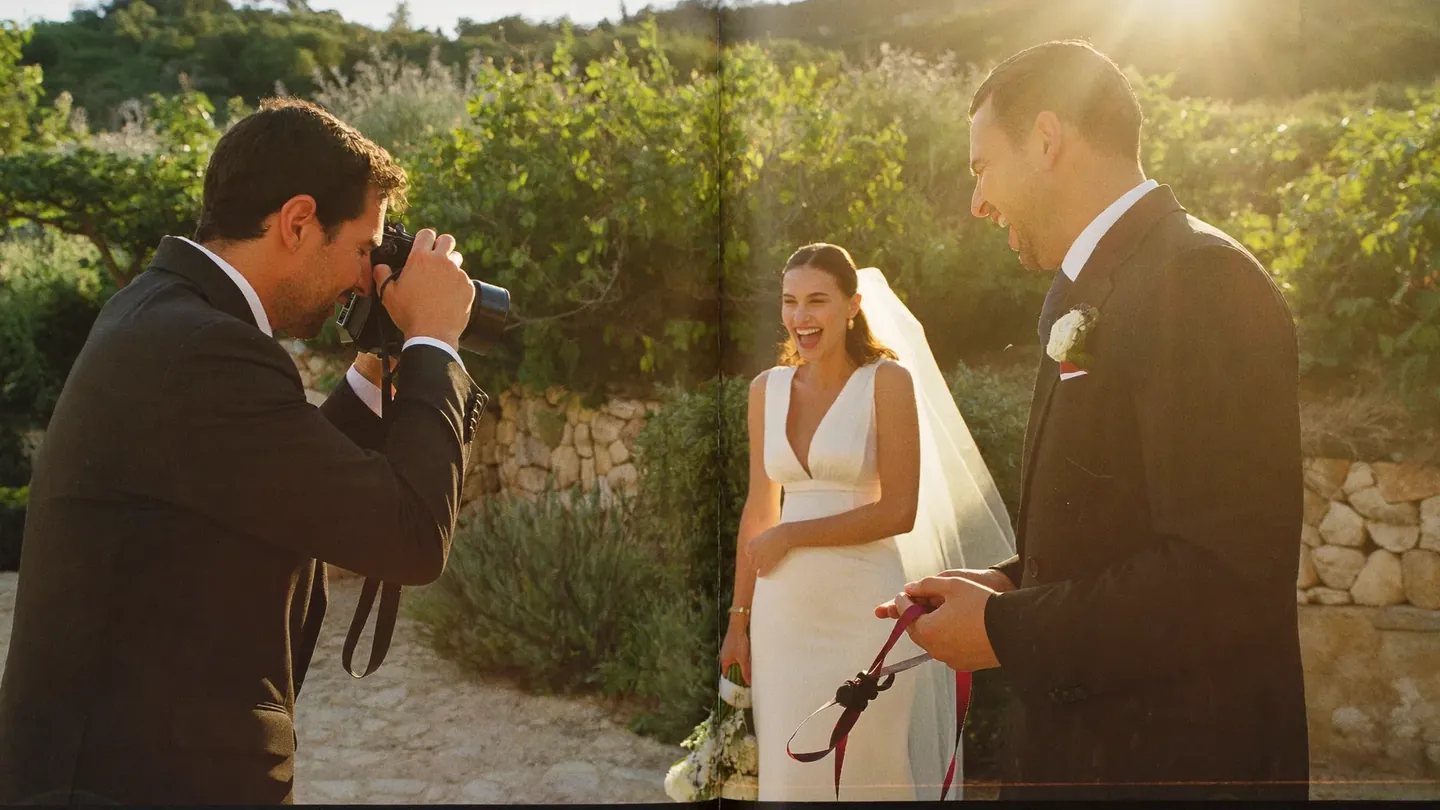
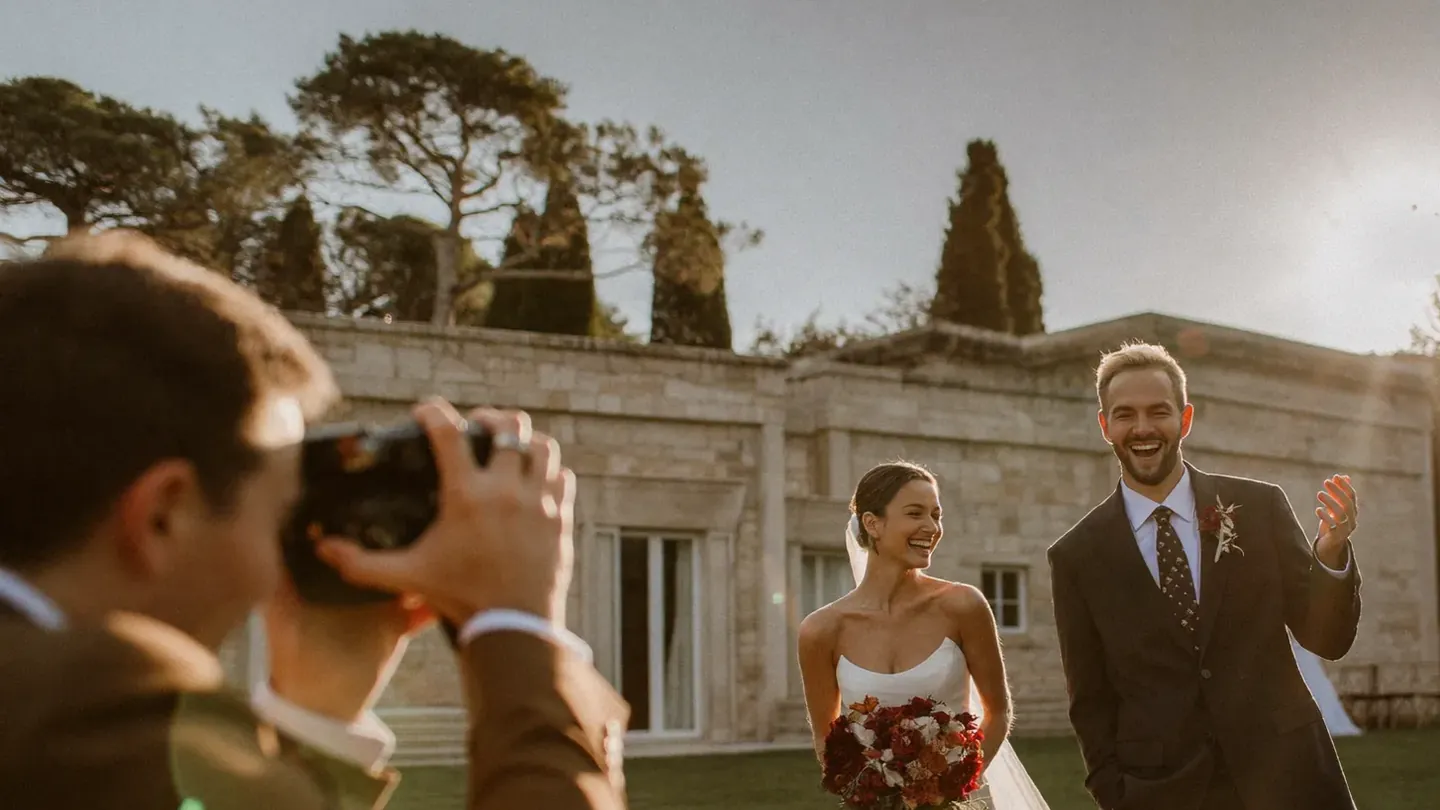
Golden hour does not wait for the main course. Decide the exact fifteen minute exit window with the producer and the venue manager during the walkthrough, and put it in writing in the timeline they use. When everyone knows the couple leaves at a fixed minute, the schedule bends around the photograph instead of the photograph bending around the schedule.
Have a fallback. If the sky closes, the same buffer becomes a portrait window under a canopy or in the venue interior you scouted in advance. A location scouting set of four frames from the venue tour is worth more than any gear upgrade on a cloudy evening.
Dual Card Backup and Same Night Ingest
Every camera records to both cards for the whole day. No card leaves the camera before the day ends, and no card is formatted until the second copy is verified on two separate drives. The ingest routine is short and boring on purpose: copy, verify checksums, back up to a second drive, and only then format the cards in camera.
Do the ingest the same night, even if editing starts later. A card that sits in a bag for three days is a card that can be lost, washed or corrupted, and a wedding cannot be reshot. Log the file count and the folder structure in the project so the second shooter's material is matched before editing begins.
- Record to both cards on every body for the entire day
- Verify the copy on two drives before formatting anything
- Ingest the same night and log the file count per body
- Upload the selects to the gallery platform before going to sleep
Same Week Teaser Gallery and Album Selection in ProductionBook
The couple is still in the afterglow during the first week and that is when they share. Publish a teaser of twenty to thirty frames within seven days, with download enabled and a single clear call to action. It generates the word of mouth that feeds next season far more reliably than a full gallery that lands six weeks later.
Album selection happens in ProductionBook: you place a curated set of spreads, mark favourites, and the couple approves or comments inside the same file. There is no shared folder of three hundred files and no email chain of maybe this one. Approvals are timestamped, so production starts the moment the layout is signed off.
| Phase | Window | Owner | Must be complete |
|---|---|---|---|
| Prep and arrival | 4 to 5 hours before ceremony | Lead photographer | Detail frames, rings, dress, invitation |
| Ceremony | Ceremony start plus 45 minutes | Lead and second | Two angles, ketubah or vows, exit |
| Family and group shots | Directly after ceremony | Lead with assistant | Full list from the brief, capped at 20 minutes |
| Golden hour portraits | Fixed 15 minute window | Lead with producer | Couple portraits, backup interior location |
| Reception and dancing | From venue entry to last dance | Second and lead | Room set, first dance, parent dances, crowd |
| Wrap and backup | Last 20 minutes on site | Lead | Card check, gear count, ingest assigned |